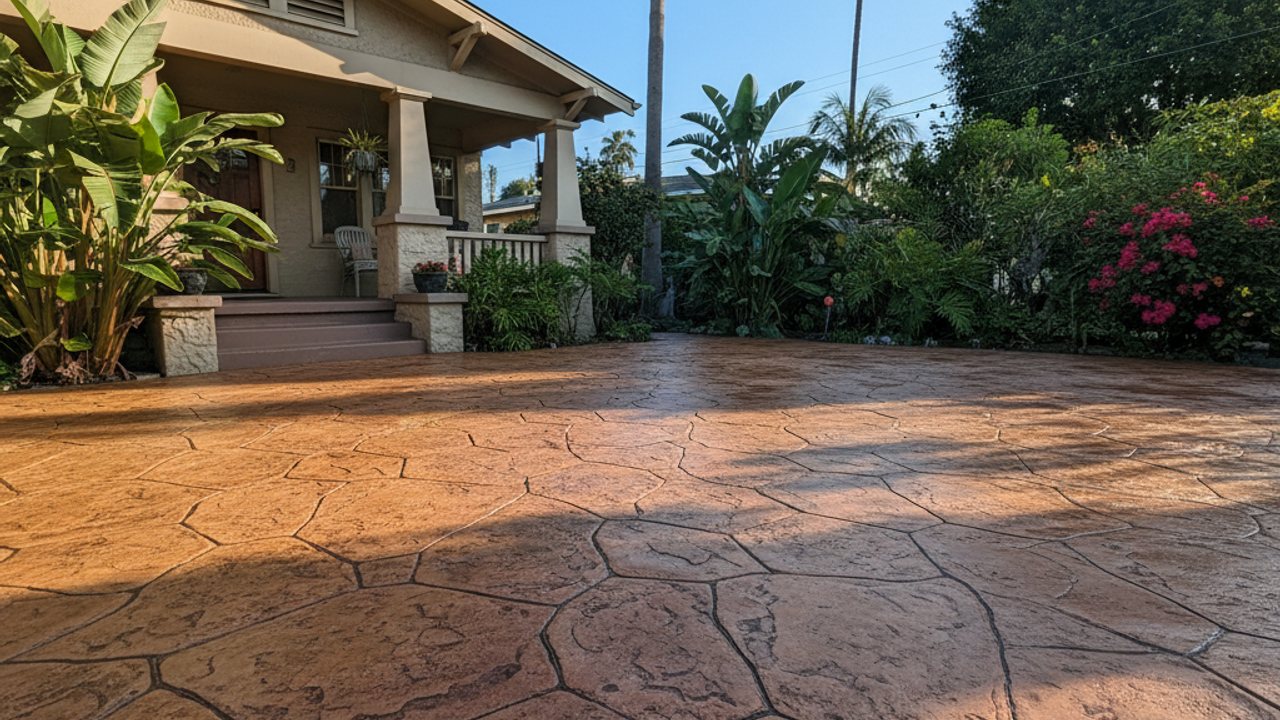
Concrete is one of those jobs where the mistakes don't show up on day one. A bad pour looks fine for six months, sometimes a year. Then you get a crack running corner to corner, or a slab that's rocked up on one side because the ground under it moved. Picking the right contractor here isn't about who has the nicest truck wrap. It's about who understands what Bossier City ground and weather actually do to concrete.
Ask what they know about the dirt before you ask about price
Most of Bossier City and the surrounding parish sits on old Red River bottomland. That means clay, and in a lot of spots, a good bit of it. Clay soil swells when it's wet and shrinks when it dries out, sometimes by an inch or more across a season. A slab poured on unprepared clay will crack or heave because the ground is moving under it, not because the concrete itself was bad.
A contractor who knows the area should talk to you about the base before they talk about the finish. That usually means excavating the clay out to some depth, laying down 4 to 6 inches of compacted crushed stone or gravel, and compacting it in lifts rather than just dumping it and driving over it once. If someone quotes a driveway or patio without mentioning base prep at all, that's a gap worth asking about directly.
What the quote should actually spell out
A real bid has numbers in it, not just a total. For a residential driveway you want to see a slab thickness, usually 4 inches for a standard driveway and closer to 5 or 6 if it'll see a truck or trailer regularly. You want to see whether they're using rebar or wire mesh, and for what. Mesh is fine for a lot of patios and walkways. A driveway that ties into the street, or a slab spanning any kind of fill, does better with rebar tied on chairs so it actually sits in the middle of the slab instead of sinking to the bottom during the pour.
Control joints matter too. Concrete is going to crack somewhere, that's just what the material does as it cures and shrinks. The joints are there to tell it where. They should be cut within about 24 to 48 hours of the pour, spaced roughly 2 to 3 times the slab thickness in feet apart. A 4-inch driveway usually wants joints every 10 to 12 feet. If a contractor skips this or does it late, you'll likely see a crack show up on its own, right where a joint should have been.
Licensing, insurance, and the permit that actually gets pulled
In Louisiana, contractors doing residential work over a certain dollar amount are required to hold a state license through the Louisiana State Licensing Board for Contractors. Ask for the license number and check it. Ask for proof of general liability insurance too, because a slab failure or a delivery truck rutting your yard is not something you want to pay for out of pocket.
For work inside Bossier City limits, driveway aprons that tie into the street and some larger slabs need a permit through the city, and the city inspects the work at points along the way, usually the forms and base before the pour. If your property is out in unincorporated Bossier Parish, that goes through the parish instead. Either way, a legitimate contractor pulls the permit themselves as part of the job. If someone tells you permits are a waste of time or money, or that you should just skip it, that's your answer on whether to hire them.
Newer subdivisions around Elm Grove and Haughton often have an HOA on top of that, with its own rules about driveway finish or fence height near a slab. Older streets closer to town, built up through the 1950s and 60s around the growth from Barksdale, usually don't have an HOA to deal with, but they come with their own issue: old sidewalks and driveways poured with no rebar at all, tree roots that have had 60 years to push things around, and sometimes shallow utility lines that weren't mapped the way they'd be today. A contractor working in those neighborhoods should be calling in a locate before they dig, not guessing.
Weather and timing, because it changes the job
Summers here run hot and humid, with plenty of days in the mid-90s through July and August. Concrete cures faster than normal in that heat, and if it isn't kept damp or sprayed with a curing compound, the surface can dry out before the slab has strength, leaving it weak and prone to dusting or shallow cracking. A contractor pouring in summer should be talking to you about curing method, not just pouring and leaving.
Winter is milder here than up north, but Bossier City still gets a handful of nights below freezing most years, usually in December through February. Fresh concrete that freezes before it's had a chance to gain strength can be damaged permanently, so a pour scheduled in that window needs cold-weather protection, like blankets, or just needs to wait for a better stretch of days. Spring brings the heaviest rain, and a lot of lots here have flat grading and slow drainage toward the street. A patio or driveway poured without attention to slope, usually a minimum of 1/8 inch of fall per foot away from the house, will hold standing water after a downpour instead of shedding it.
Red flags worth walking away from
- A price that's way under everyone else's with no explanation, which usually means thinner concrete, no rebar, or a skipped base.
- Cash only, no written contract, no mention of a permit.
- Can't or won't answer a direct question about mix strength (residential slabs here are typically poured at 3,000 to 4,000 psi) or slab thickness.
- No mention of expansion joints where a new slab meets an existing driveway, garage slab, or the house foundation.
- Pushing you to pour on a day when it's clearly going to rain within a few hours, or in the dead heat of a July afternoon with no plan for curing.
None of this means you need to interrogate every contractor who shows up. It means the good ones will already be telling you most of this before you ask.
What a reasonable timeline looks like
A standard driveway or patio pour, once the base is in, takes a day for the pour itself. You can usually walk on it in 24 to 48 hours. Vehicles need to stay off for at least 7 days, and full cure strength takes closer to 28 days, which is when the concrete has reached the strength it was designed for. A contractor who tells you it's fine to park a car on it the next day either doesn't know better or isn't planning on being around when it cracks.
We've poured driveways, patios, and slabs all over Bossier City and the towns around it, on old clay lots and new fill alike, and this is the same list we work off of ourselves. If you want a second opinion on a bid you've already got, or want to talk through what a job on your property actually needs, take a look at our concrete contractor work and get in touch.